The Friendship Center Partners with Endeavor Health to Provide Access to Food and Vital Resources in Chicago’s Northwest Side

The Friendship Center enters the final year of a $500,000 multi-year grant to alleviate food insecurity by serving over 50,000 folks in the Northwest side of Chicago through their full-service food pantry and public benefits assistance program.

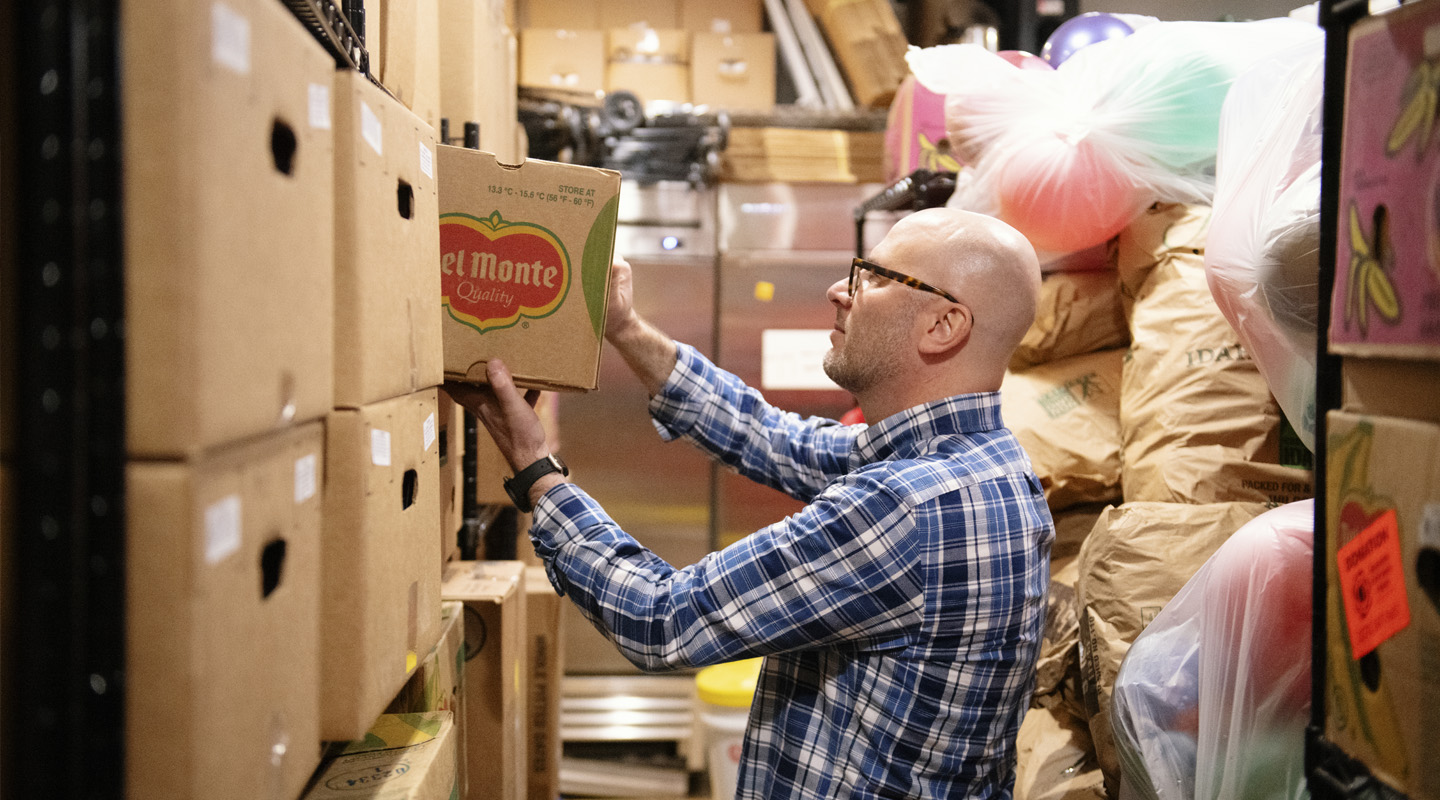
(Caption: Executive Director, Justin Block restocks shelves at The Friendship Center. Image courtesy of Endeavor Health)

Chicago – January 16, 2024 – The Friendship Center, a neighborhood food pantry that fosters hope and dignity on Chicago’s northwest side through access to food and vital resources, is proud to announce its selection as a partner in Endeavor Health’s 2024 Community Investment Fund (CIF). This year, The Friendship Center has been awarded $168,500 to support their neighbors facing hunger. 

Through their full-service food pantry, they provide neighbors with a grocery store shopping experience with shelf-stable, fresh milk, eggs, meat, and produce to shop for, four days a week.  They also deliver food to home-bound seniors or people with disabilities who are unable to shop at the pantry. Additionally, they serve a hot meal to go once a week in partnership with chefs from the Fifty/50 Restaurant group. To help Chicago families and their pets stay together during times of financial hardship, they also serve 400 cats and dogs each month through their pet pantry. While they aim to solve their neighbor’s immediate needs through the pantry, they also work to address their long-term needs by providing assistance with SNAP and Medicaid applications and referring neighbors to other social service agencies in the community. 

Executive Director, Justin Block shares, “This multi-year grant from Endeavor Health has truly been transformational to The Friendship Center. In 2022, we were able to optimize our space to better support our neighbors and give them a more dignified shopping experience at the pantry. It’s also allowed us to hire more team members who have increased our ability to provide access to food and vital resources to twice as many folks in 2023 as we did in 2021.”

Endeavor Health selected The Friendship Center as one of 43 local organizations across the Chicagoland area to collaborate on programs focused on behavioral health, violence prevention, housing and food insecurity, access to care and workforce development.

“Our Community Investment Fund has made a remarkable impact since its launch in 2022, touching over 211,000 lives and supporting a significant expansion of behavioral health counseling, bilingual health education and mobile medical services in our communities,” said Kristen Murtos, Chief Innovation & Transformation Officer at Endeavor Health. “At Endeavor Health, we are not just funders but conveners, bringing together diverse groups to cultivate collaboration and innovation. We are thrilled to grow and deepen the impact of our Community Investment Fund this year, marking a significant step forward in our commitment to enhancing health and wellness across the communities we serve.”

The Friendship Center will use the investment to better serve our neighbors facing hunger. From the Greater Chicago Food Depository’s analysis, there are about 70,000 folks in our community dealing with food insecurity. In 2023, we served close to 50,000 neighbors. Our goal is to grow our services to meet the needs of our community by feeding the line and shortening the line. We are grateful for amazing partners like Endeavor Health Swedish Hospital who are committed to seeing our community thrive. 

Shortly after Andrea’s move to Lincoln Square from South Carolina, she was looking to establish care with a primary care provider, find a new therapist, re-establish her SNAP benefits in Illinois, and find a job. The Friendship Center’s benefits coordinator, Lena Stein, helped Andrea apply to SNAP and referred her to several partner organizations to help her with her goals. Andrea was successful at establishing care with a new primary care provider, receiving SNAP benefits, and securing a job just a few train stops away from her new home. This is just an example of one person The Friendship Center can support through vital resource support in our community. 

For more information about The Friendship Center and its efforts in hunger relief, please visit http://www.friendshipcenterchicago.org. To learn more about Endeavor Health’s Community Investment Fund, visit endeavorhealth.org/cif.

###

The Friendship Center is a 501(c)(3) nonprofit neighborhood food pantry dedicated to fostering hope and dignity within our northwest Chicago community. They serve approximately 4,500 neighbors monthly through their client-choice fresh food pantry, home deliveries, hot meals, and assistance with public benefits. They also extend support to around 400 cats and dogs through their monthly pet food pantry. Through volunteers, food drives and donors their neighbors in need can receive nutritious food and vital resources. 

About Endeavor HealthEndeavor Health℠ is a Chicagoland-based integrated health system driven by our mission to help everyone in our communities be their best. As Illinois’ third-largest health system and third-largest medical group, we proudly serve an area of more than 4.2 million residents across six northeast Illinois counties. Our more than 27,000 team members and more than 7,100 physician and advance practice provider partners are the heart of our organization, delivering seamless access to personalized, pioneering, world-class patient care across more than 300 ambulatory locations and nine hospitals, including eight Magnet-recognized acute care hospitals – Edward (Naperville), Elmhurst, Evanston, Glenbrook (Glenview), Highland Park, Northwest Community (Arlington Heights) Skokie and Swedish (Chicago) and Linden Oak Behavioral Health Hospital (Naperville). For more information, visit endeavorhealth.org.

Providing Better Support with our Partners

The most humane and effective way to get the outdoor cat population to a manageable level is through Trap- Neuter- Return (TNR) services. The Friendship Center Pet Food Pantry compliments the Tree House Humane Society’s TNR program in many ways.

Cats congregate in areas where there are resources, and many caretakers end up caring for more cats than they can support. While many colony caretakers have a hard time affording the full scope of needed care, out of deep compassion, they continue to dedicate their funds and time to help the cats they encounter. Tree House does what it can to stabilize the colony’s numbers through its no-cost, on-the-ground TNR program.

Due to the speed at which a colony of cats reproduces, the numbers can get out of hand. It is not uncommon for people to start seeing a few cats first, and then for that number to skyrocket. Sometimes, the number of actual cats in a colony is much greater than what the caretaker even realizes. There are many times where we are called onto a site with 10 cats or more! After we treat a colony to stop the chaos of quickly reproducing cats and the focus turns to the colony’s immediate care, these amazing people are often faced with a scary reality: loving the cats like their own but not having enough resources to feed them adequately.

When I volunteer at the Pet Food Pantry, I see many of those same clients I’ve worked with receiving the help The Friendship Center provides. It warms my heart to see people who I know pour their heart into the care of the cats, have a resource to turn to in difficult times. Because of programs like The Friendship Center’s Pet Food Pantry, caretakers have a place to get support and some financial relief. 

Tree House Humane Society partners with The Friendship Center by sharing pet supplies such as food, collars, beds, litter, and other essential items. With the amazing space and program at The Friendship Center, together we can assist many more pet-friendly community members than if each acted alone.  

-Olivia Radziszewski


About the author:

Olivia leads the TNR efforts at Tree House Humane Society. She has always been interested in helping and supporting animals. As well as has been a foster in many organizations in the Chicagoland area. Having worked in human services as well, she is grateful for the opportunity to bring two together by participating in programs like The Friendship Center Pet Food Pantry. 

Food Waste Reduction Efforts at The Friendship Center

Earth Day is April 22, and Stop Food Waste Day is April 27, so it seems like a perfect time to highlight the issue of food waste and the ways that The Friendship Center is working to reduce wasted food while improving service for our clients.

Food waste has enormous environmental, ethical, and economic impacts. According to ReFED, a whopping 35% of all food in the U.S. was either unsold or uneaten in 2019, representing $408 billion worth of food. When food is wasted it also wastes all the land, water, energy, labor, and love that goes into producing it. And when food decomposes in landfills, it generates greenhouse gasses that contribute to climate change. In fact, food waste accounts for 4% of total greenhouse gas emissions in the U.S.

This level of food waste is happening at the same time that 1 out of 6 Americans struggle with food insecurity. Within The Friendship Center’s service territory, 1 in 3 people, or 66,000 of our neighbors, are food-insecure.

While there are many systemic reasons for this disconnect, food waste is a solvable problem. The EPA’s Food Recovery Hierarchy suggests that beyond source reduction (prevention), the best option for reducing food waste is to Feed Hungry People, which, of course, is our mission at The Friendship Center.

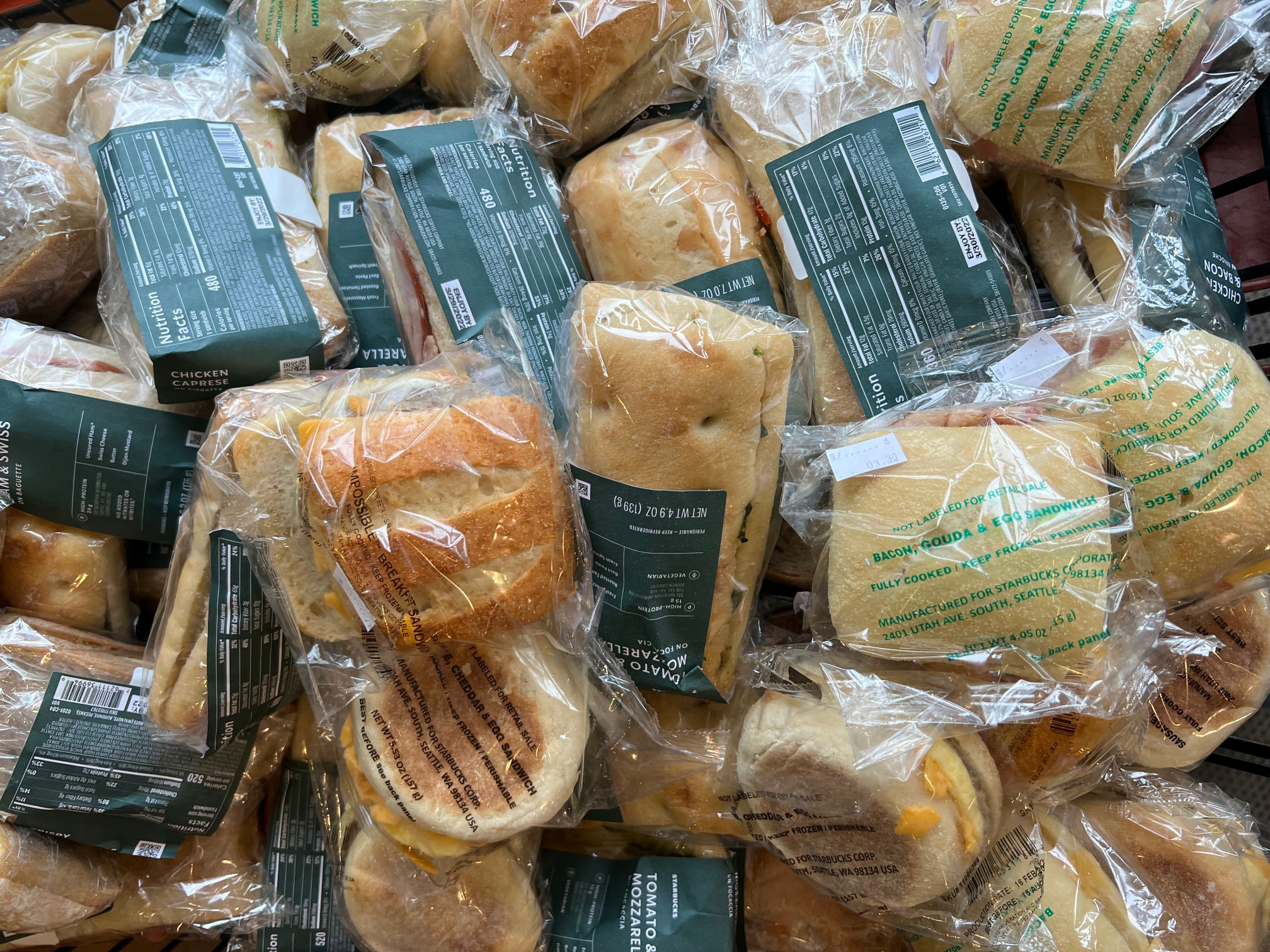
The Friendship Center currently rescues and redistributes unsold, high quality food from a handful of local retailers to augment our inventory. Donations include meat, fresh produce, dairy, baked goods , and shelf-stable items.

Even more exciting is that with our new grants from Swedish Covenant Hospital and the Greater Chicago Food Depository, The Friendship Center is currently renovating our facility.  Increasing our cold storage capacity and acquiring a new van will allow us to significantly expand our food rescue efforts and increase the amount and variety of culturally-relevant foods we can offer our clients.

Farther down the Food Recovery Hierarchy is composting, which is one more way that The Friendship Center is working to reduce food waste. Composting is a way of recycling food scraps and turning them into a nutrient-rich soil amendment. Foods in our inventory that go past their prime, as well as food scraps from our hot meals prep, are placed in toters out back and collected weekly by a compost collection service.

The Friendship Center is looking forward to expanding our food rescue efforts in the future– for the health of our neighbors and the health of our planet.

 – Susan Casey


About the author:

Susan Casey has served on The Friendship Center board since April 2021. She is the Zero Waste Schools Program Manager at the nonprofit Seven Generations Ahead, where she works with K-12 schools to reduce waste. Susan is a member of the Wasted Food Action Alliance and the Illinois Food Scrap Coalition.

The Intersection Between Hunger and Nutrition

March is National Nutrition Month, which is a time to reflect and learn about making informed food choices and developing healthful eating and physical activity habits. Developing healthful eating habits, however, is often on the backburner or an unrealistic goal for families facing hunger. A growing body of research shows that food insecurity increases risk for poor nutrition and diet-related diseases, as well as imposes barriers to chronic disease management.

Food insecurity is often associated with a lower nutrient intake as well as a lower intake of fruits and vegetables.

Hunger is linked to poor nutrition for various reasons, including:

  • limited resources to obtain healthy foods
  • a lack of access to healthy, affordable foods
  • a lack of kitchen equipment to preserve and cook food
  • cycles of food deprivation and overeating
  • high levels of stress, anxiety, and depression
  • fewer opportunities for physical activity

While adequate food intake is important for everyone, it is especially important for children, whose bodies are still developing. A 2021 study compared the nutritional status of food-secure children and food-insecure children aged 1-18 years. It was found food insecure children had a lower quality diet with an increased intake of sodium, saturated fat, and added sugars than the recommended amount. Additionally, food insecure children were at higher risk for inadequate intake of vitamin D and magnesium.

Knowing that we must consider our patient’s unmet social needs in order to improve their overall health, Swedish Hospital’s Food Connections programs partners with The Friendship Center to remove food access as a barrier to health.

The Food Connections programs provide emergency food to patients in need, works to connect patients to community resources such as The Friendship Center for long term food support, and provides free nutrition education to food insecure patients, staff and community members. Together we are ensuring that everyone has access to sustainable, healthy food sources and improving their long-term health. 

-Amanda Kritt, RD LDN


About the Author:

Amanda Kritt is the Food Connections Coordinator at Swedish Hospital.

The Friendship Center Food Pantry to Partner with NorthShore University HealthSystem to Transform Pantry and Support More Neighbors in Need

$200,000 from NorthShore’s Community Investment Fund will accelerate strategies to serve Chicago’s food insecure at scale with respect and dignity 

[Chicago] – February 28, 2022 – The Friendship Center, a food pantry on Chicago’s northwest side, today announced receipt of $200,000 from NorthShore’s Community Investment Fund (CIF) to improve the way it serves its neighbors facing hunger by modernizing its facility and increasing mobile capacities to provide needed resources across its area neighborhoods. As one of the first to partner with NorthShore through its CIF, the organizations will work collaboratively to reduce the stigma associated with visiting a food pantry and to increase stability in the lives of those facing food insecurity. 

“Food insecurity in our communities has reached new levels because of COVID and high inflation. Unfortunately, these economic shocks will be felt for years. This investment will allow us to quickly evolve to better meet the sustained need in a number of ways,” said Justin Block, Executive Director of The Friendship Center.

NorthShore, including Swedish and Northwest Community Healthcare, selected The Friendship Center as one of seven local organizations across Lake and Cook Counties to collaborate on programs that enhance health and wellbeing, advance health equity and support local economic growth. As a prominent feature of their recently finalized merger, NorthShore and Edward-Elmhurst Health each committed $100 million, which will generate millions of dollars annually, to benefit their respective communities. 

“We all must play a greater role in environmental stewardship and The Friendship Center is on the front lines of our health sustainability efforts by supporting food insecure populations to improve overall care, quality and safety within our communities,” said Gabrielle Cummings, President, NorthShore Legacy Acute Care and Highland Park Hospital. 

The Friendship Center will use the investment to benefit the people it serves by transforming its facility into a welcoming, normalized grocery shopping experience; by increasing access to available helpful benefits, information, and services; by optimizing its onsite storage capacity; and by becoming more flexible with mobile distributions. NorthShore-Swedish and The Friendship Center currently partner to provide nutrition classes and COVID-19 vaccine awareness information to The Friendship Center clients, and to supply groceries to The Cupboard, the onsite food pantry at NorthShore-Swedish.

“Our Community Investment Fund is built on the principle that the more we connect and invest in our communities, the better we all become,” added Cummings. “We aim to be a true catalyst for change—putting our talents, unique capabilities and resources to work by collaborating with local organizations, like The Friendship Center, through creative partnerships for the benefit of our communities.” 

To learn more about NorthShore’s commitment to Diversity, Equity and Inclusion and the Community Investment Fund, click here

About The Friendship Center

Founded in 1969, The Friendship Center is a non-sectarian, nonprofit 501(c)(3) organization providing groceries for 2,000 residents every month in the Albany Park, Lincoln Square, North Park, Ravenswood, and West Ridge neighborhoods of Chicago and Lincolnwood. The food pantry is accessible four days a week and provides a hot meal service Thursday evenings, as well as homebound grocery delivery service. The Friendship Center also hosts a pet food pantry once per month. The Friendship Center also supports programming to reduce food waste and improve food security for the people it serves; educates the public about the issue of hunger; and improves access to resources that protect people from going hungry. Visit friendshipcenterchicago.org, or find us on Facebook, Instagram or follow us on Twitter.

About NorthShore – Edward-Elmhurst Health

NorthShore – Edward-Elmhurst Health is a fully integrated healthcare delivery system committed to providing access to quality, vibrant, community-connected care, serving an area of more than 4.2 million residents across six northeast Illinois counties. Our more than 25,000 team members and more than 6,000 physicians aim to deliver transformative patient experiences and expert care close to home across more than 300 ambulatory locations and eight acute care hospitals – Edward (Naperville), Elmhurst, Evanston, Glenbrook (Glenview), Highland Park, Northwest Community (Arlington Heights) Skokie and Swedish (Chicago) – all recognized as Magnet hospitals for nursing excellence. Located in Naperville, Linden Oaks Behavioral Health, provides for the mental health needs of area residents. For more information, visit NorthShore.org, SwedishCovenant.org, NCH.org and EEHealth.org